How to Get to Drake Bay
Tracopa bus to Palmar Norte, transfer to Sierpe, then the boat through the mangroves — or a short hop to the Drake Bay airfield.
Updated · by Karol Valentina Jiménez Jiménez
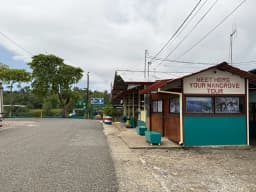 SierpeBoat dock · Open in Maps
The overland route
Interamericana Sur
Ruta 2Cartago · Cerro de la Muerte · San Isidro · Buenos Aires
The inland route climbs over Cerro de la Muerte — the highest paved pass in the country — then drops into San Isidro de El General and runs east through Buenos Aires before turning southwest to Palmar Norte. Cooler, often foggy at the top, and the shorter of the two on the map.
About 6–7 hours to Palmar Norte
Costanera Sur
Ruta 27 + Ruta 34Orotina · Jacó · Quepos · Dominical · Uvita
The coastal route leaves San José on the Caldera highway, meets the Pacific near Tárcoles and follows the shore south through Jacó, Quepos, Dominical and Uvita. Flatter and warmer, with beach towns to break the trip if you want to split the drive over two days.
About 6 hours to Palmar Norte
On the route
San José
Most overland trips start here. Tracopa coaches leave from the capital toward the southern Pacific — some run inland over the mountains, others down the coast.
01
Pick a road south
Tracopa coaches run to Palmar Norte on both corridors: inland over Cerro de la Muerte, or down the Costanera through Jacó and Uvita. Either is about six to seven hours. Schedules change — buy the ticket and check availability in the Passer app rather than assuming a walk-up seat.
02
Palmar Norte to Sierpe
From Palmar Norte it is a short taxi or local transfer to the Sierpe dock. Leave slack for traffic and for buying the boat ticket.
03
Boat to Drake Bay
The water leg through the mangroves and along the coast is typically about 1.5 hours. Plan to arrive the afternoon before a full Corcovado or Caño day.
Passer shows Tracopa (and other) bus seats and lets you pay on your phone — useful the night before you leave San José. passer.live
Buy tickets on PasserThe two usual ways in
Drake Bay has no highway through the village. Almost everyone arrives by boat from Sierpe or by a small plane to the Drake Bay airfield (DRK). Both are normal. The boat is slower and more memorable. The plane is faster if you are tight on days.
Two roads south to Palmar Norte
If you are coming overland from San José, Tracopa coaches run south to Palmar Norte — that is the bus stop most Drake-bound travelers use. There are two corridors and both are normal. The Interamericana Sur (Ruta 2) climbs inland over Cerro de la Muerte, drops into San Isidro de El General and swings east through Buenos Aires before turning down to Palmar. The Costanera Sur (Ruta 34) leaves on the Caldera highway, meets the Pacific near Tárcoles and follows the shore through Jacó, Quepos, Dominical and Uvita.
Reckon on roughly six to seven hours either way. The mountain route is cooler and often foggy at the top; the coastal route is flatter and easier to break into two days if you want a night in a beach town. From Palmar Norte it is a short taxi or local transfer to the Sierpe dock; the village itself is not on the Tracopa line.
Schedules and leftover seats change. Buy the ticket and check availability in the Passer app (passer.live) rather than counting on a walk-up seat the morning you leave. Leave slack for traffic and for buying the boat in Sierpe.
Boat from Sierpe
From the Sierpe dock, public and private boats run the Térraba-Sierpe wetlands and then the coast to Drake Bay. The water leg is typically around 1.5 hours, longer if the tide or swell is awkward.
This is the arrival we recommend when you have the time. You enter the Osa through the largest mangrove system in Costa Rica, then the Pacific. Build slack into the day. Do not book a 6 a.m. Corcovado departure on the same morning you are still supposed to be on a boat from Sierpe.
Flying in
Domestic flights from San José (and sometimes other strips) land at Drake Bay. The hop is short; the constraint is luggage weight and the schedule. Once you land, it is a short transfer into the village or to your lodge.
If your flight arrives at midday, an afternoon San Josecito or a next-morning Corcovado day is usually more realistic than rushing straight into a full park itinerary.
Matching tours to your arrival
Tell us how you are getting here when you write on WhatsApp. We will not sell you a departure you cannot make. Corcovado and Caño Island are full days. San Josecito or a shorter coastal outing is the better first-afternoon option if you land late.
Leaving is the reverse: morning tours need a later boat or flight out. We help you sequence it so you are not jogging through the village with a dry bag and an unused park permit.